


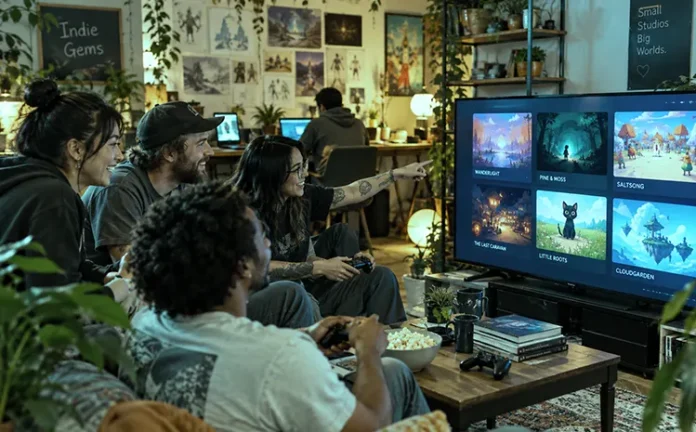
Hidden gems rarely reach players through a single spotlight. The notable change in indie discovery is a more distributed process: smaller studios can appear through storefront recommendations, playable events, specialist curators, and player communities. This does not prove that major storefronts have lost their role. It shows a broader set of routes through a vast catalogue, rather than dependence on one major advertising push. For players, discovery can begin with a personal preference or a playable sample, then gain context through a trusted recommendation.
Digital gift cards work by sending a redeemable code that the buyer or recipient enters on the relevant platform or service. On Eneba, a digital marketplace, readers who buy Apple card online can access a digital option and review product-page region and platform information.
Storefront signals narrow the field
Storefront tools supply a useful first layer. Steam’s recommendation and related-game views use game tags and similarities between titles to place unfamiliar work beside relevant games. Discovery Queues and recommendation feeds add further routes, while friend activity can point players toward work already noticed by people they know. Together, these signals turn a large catalogue into paths shaped by genre, mechanics, and individual taste.
Curators give those signals human context. Steam Curators can be individuals or groups that recommend games to followers, and Steamworks says a smaller curator with highly tailored recommendations may be as valuable as a larger curator with a broad audience. A genre-focused recommendation can explain why an unfamiliar title suits a particular player’s interests better than a general promotional feed.
Playable and creator-led routes broaden discovery
Steam Next Fest adds a direct, playable element. Its format connects players with upcoming games through demos and developer livestreams, while helping developers gain exposure, collect feedback, and build an audience before launch. A demo lets players judge an unfamiliar game’s appeal firsthand and gives a team early audience signals.
itch.io illustrates a more creator-led part of the picture. It describes itself as an open marketplace focused on independent digital creators and games, where creators can set prices, manage distribution, use featured content, and access analytics about discovery or play. Game jams and community participation place experimentation beside storefront presentation and give unusual projects another route to interested players.
These routes do different jobs. Storefront features organize choice, while events and community spaces provide direct experience or useful context. Their value lies in combination, as players can move between them while deciding what to try.
Community context shapes the next stage
Community recommendations work alongside storefront tools rather than replacing them. Friends, genre communities, streamers, and specialist reviewers can offer perspective that automated recommendations cannot. That context is relevant amid financial pressure on developers. The 2025 GDC State of the Game Industry report stated that half of developers were self-funding their games, so community-led visibility can be important for teams without the marketing reach of major publishers.
For self-funding teams, routes that support feedback and audience-building are relevant alongside formal storefront visibility. They complement rather than displace storefront discovery tools.
The direction is not toward one perfect source for indie discovery. It points to a mix of algorithmic cues, curated judgement, hands-on demos, and player conversation, with each route serving a different part of the search. Eneba fits this wider habit as a place to browse and compare digital options. Its role sits beside the curator, demo, or community insight that may bring a hidden gem into view.
Also Read: How to Find Your Next Favorite Game Without Relying on Hype Alone
