


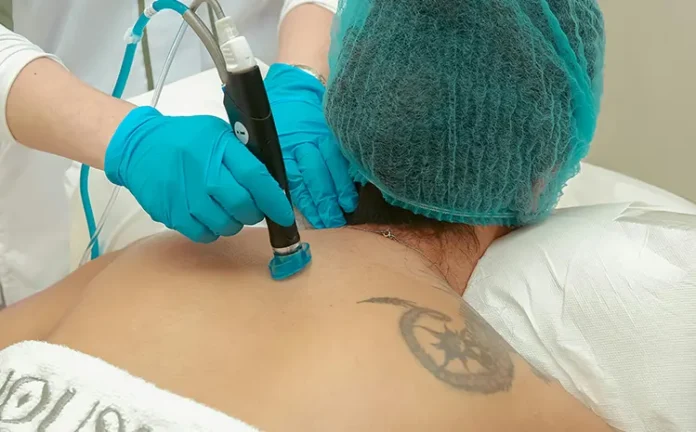
If you’ve ever considered removing a tattoo, you’ve probably wondered what’s actually happening beneath your skin during the process. Laser tattoo removal might seem like magic, but it’s actually a fascinating combination of physics, biology, and your body’s natural healing abilities. Understanding the science behind the procedure can help ease any concerns and set realistic expectations for your tattoo removal journey.
How Laser Energy Targets Tattoo Ink
When a laser beam hits your tattooed skin, it’s specifically targeting the ink particles embedded in your dermis layer. The laser produces incredibly short pulses of intense light that pass through the outer layer of skin without causing damage. These pulses are measured in nanoseconds or even picoseconds, which means they’re faster than you can blink.
The laser energy is absorbed by the tattoo ink particles, causing them to heat up rapidly and shatter into much smaller fragments. Think of it like breaking a rock into pebbles, then into sand. Different colors of ink absorb different wavelengths of light, which is why multiple types of lasers are often needed for multicolored tattoos.
Your Immune System Does the Heavy Lifting
Here’s where your body becomes the real hero of the story. Once the laser has broken down the ink particles into smaller pieces, your immune system kicks into action. White blood cells called macrophages rush to the treatment area and begin engulfing these tiny ink fragments.
Over the following weeks and months, these macrophages transport the fragmented ink particles through your lymphatic system, where they’re eventually filtered out and eliminated from your body. This is why tattoo removal requires multiple sessions spaced several weeks apart. Your body needs time to clear away the shattered ink before the next treatment can target deeper or remaining particles.
What You’ll Notice Immediately After Treatment
Right after a laser session, your skin will show some immediate reactions that are completely normal. You’ll likely see the treated area turn white or frosted for a few minutes. This is called immediate whitening and occurs due to the rapid heating and release of gas bubbles in the skin.
Within hours, you’ll probably notice swelling, redness, and possibly some blistering around the tattoo. These are signs that your body is responding appropriately to the treatment. The area might feel similar to a sunburn, and some people compare it to the sensation of getting the tattoo in the first place. If you’re seeking professional treatment, a leading tattoo removal clinic in Brisbane will provide detailed aftercare instructions to manage these temporary effects.
The Healing Process Over Time
During the first week after treatment, your skin will be in active healing mode. Any blisters that form are actually protecting the skin beneath as it repairs itself. It’s crucial not to pop these blisters, as they serve as natural bandages.
As the days pass, you might notice scabbing or flaking, similar to what happens with a healing wound. The tattoo may look darker initially before it starts to fade. This is because the shattered ink particles are still present and being processed by your immune system. The real fading becomes apparent over the following 6-8 weeks as your body clears away the fragmented ink.
Why Multiple Sessions Are Necessary
Your skin can only handle so much laser energy in one session without risking damage. Additionally, tattoo ink sits at various depths within your dermis layer. The first few sessions typically target the most accessible ink particles near the surface.
As those particles are cleared away, subsequent sessions can reach deeper layers of ink. Professional tattoo removal typically requires anywhere from 5-15 sessions depending on factors like ink color, tattoo age, location on your body, and your individual immune response.
Long-Term Effects on Your Skin
Most people experience complete healing with minimal to no scarring when the procedure is performed correctly. Your skin has remarkable regenerative abilities, and the laser targets ink particles rather than skin tissue itself.
Some people may notice slight texture changes or temporary pigmentation differences in the treated area. These usually resolve over time as your skin completes its healing cycle. Proper aftercare and allowing adequate time between sessions significantly reduce the risk of adverse effects.
Making an Informed Decision
Understanding what happens to your skin during laser tattoo removal empowers you to make informed decisions about the process. The combination of advanced laser technology and your body’s natural healing mechanisms makes safe, effective tattoo removal possible. While the journey requires patience and multiple sessions, knowing that your skin is actively working to clear away unwanted ink can make the process less mysterious and more manageable.
Also Read: Light Therapy For Skin Rashes: Does It Work?